
Everyone wants a “showcase” project — until the deadline starts staring them in the face. In project management, innovation is often a double-edged sword. When we extended our services into a new territory, the mandate was clear: make it a global showcase.
The Challenge
We weren’t just entering a new market; we were launching an overhaul of our entire ecosystem. We shifted from stable on-premise solutions to SaaS, introduced a brand-new authentication architecture and deployed next-generation Interactive Terminals.
It was a gold mine of innovation — and a minefield of risk
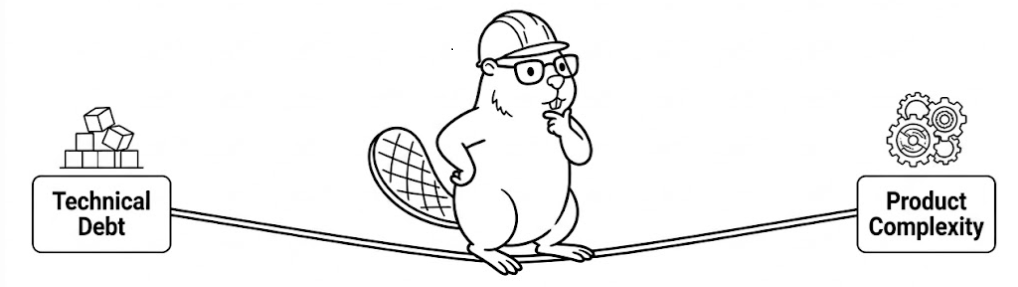
Local stakeholders were naturally skeptical. The technical debt of the “old-fashioned” legacy systems was clashing with our “new-world” tech. To make things more interesting? The deadline was carved in stone by the authorities.
OUR RESPONSE
When the stakes are high, “hope” is not a strategy. We shifted the narrative from assuming it would work to proving it would work through 3 decisive pillars:
- No Sugar-Coating (Radical Transparency) – We gave everyone a honest “heads-up” on the math of the risk. This triggered an immediate, tense debate. The project team, feeling the immense pressure of the deadline, was desperate to rely on workarounds and minimal testing to save time. They saw refactoring as a luxury we couldn’t afford.
By putting the “math of the risk” on the table, the conversation was shifted. It wasn’t about being “difficult”; it was about showing that a 2-week “shortcut” today would lead to a 2-month catastrophic failure at go-live. We stopped arguing about speed and started negotiating on technical debt.
This transparency gave the developers the “air cover” they needed to do the job right, rather than just doing it fast. - Isolating the Variables – We secured multiple testing environments ahead of schedule to ensure our “new tech” could be stress-tested against the “old reality” without compromising production. Initially, the DevOps teams were resistant. From their perspective, setting up redundant, high-fidelity environments was a “waste” of precious lead time and budget.
The tension broke when we ran our first integration simulation. We didn’t just find a minor bug; we uncovered a fundamental incompatibility between the new authentication layer and the legacy system. The simulation essentially “crashed” the mock-up system. Once the team saw that failure occur in the sandbox — rather than in production — the resistance evaporated. The “waste of time” suddenly became their most valuable tool. It bought them the time to refactor the logic before anyone outside the project room even knew there was a risk. - Aggressive Deep-Dives – By facilitating intense technical verifications, we didn’t just find bugs; we built trust. The local technical leads weren’t “anti-SaaS” — they knew it was the future. However, they were under immense pressure, maintaining “Old World” systems for remaining markets while mastering this new rollout. Their resistance came from time poverty. They feared a rushed “black box” implementation would create a mountain of new support tickets they couldn’t handle.
We didn’t waste their time with slides; we went straight to the friction points. We mapped the new SaaS flows against the legacy logic they were still supporting in the remaining markets, ensuring the new system wouldn’t create “invisible” work later. These sessions turned the local leads into co-architects. Their skepticism disappeared because we built a foundation of maintainability, not just “innovation”.
The Result
Innovation shouldn’t be a gamble. We managed to flip the script: the local authorities went from aversive to proud. We delivered a state-of-the-art system that didn’t just look good on a slide deck — it worked seamlessly with the existing tech.
The go-live was flawless, balancing cutting-edge innovation with old-fashioned reliability.
The K2XP Takeaway
Innovation is only an asset if you have the discipline to manage the risk. A project isn’t a success because it uses new technology; it’s a success because that technology doesn’t stop the business from running.
Don’t let your “Showcase Project” become a “Cautionary Tale”.
If your deadline is fixed but your risks are growing, we should talk.
 Hungarian
  English
Vélemény, hozzászólás?